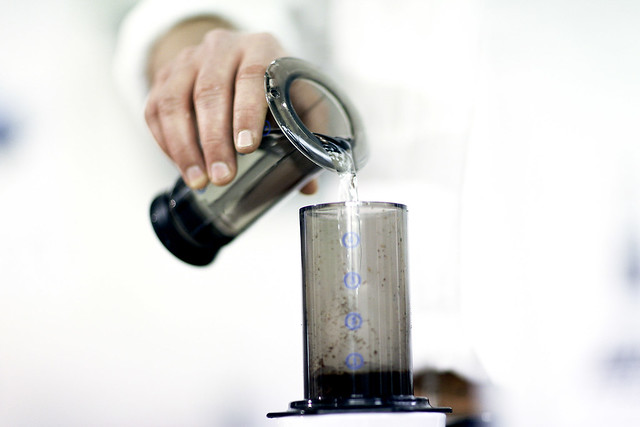
This is a talk I gave in the first Tampere Web Dev meetup in January 2012.
I don’t have a very long history with coffee. To be honest, I really only started drinking it when I was well into my twenties. Even then, I didn’t really like it, but surviving through exam periods took the better of me. It wasn’t until 2010 – when I first heard about Aeropress and then stumbled upon Mathias Meyer – that I found out there is a whole another world of coffee I had never before explored. Thus, with the enthusiasm of a beginner and the confidence of a 20-year-old, I shall tell you about my journey.
I won’t go into too much detail or technicalities. This will just be an introduction with the bare minimum you’ll need to get started. There are limitless opportunities for experimenting in the world of coffee. Now is not the time for that.
This will be a very opinionated piece. Many people – even coffeelovers – would disagree with many points. They would be be wrong, of course, but still have a right to their opinions.
Let’s start by defining what makes good coffee. Actually, let’s flip the question around and talk about what does not mean good coffee.
-
If you think you need milk or sugar in your coffee, you’re not talking about good coffee. Sorry, but you just aren’t. Even with good coffee you might choose to use them – I will frown upon it, but hey, it’s your choice – but you won’t need them.
-
Espresso (necessarily). Many people I know say that they don’t like any of those fancy coffees, by which they mean that they don’t like espresso. To be honest, I don’t care that much for espresso, either. I like good espresso like the next guy, but I actually think that great filter coffee beats the hell out of good espresso any day.
The difference is a bit like between a vodka shot and an exquisite old Scotch. Sure, you can make great drinks from the vodka, too, but it’ll never be as smooth as a dram of 25-year-old Bowmore.
The bottom line in my opinion is that while you might want to delve into espresso geekery later on, it’s not the best place to start. Because great coffee shouldn’t be…
-
Prohibitively expensive. Since we don’t start our love affair with coffee with Espresso, we also don’t need equipment that sets us back hundreds or even thousands of Euros and is a hassle to maintain. To me, starting the hobby should be reasonably inexpensive and have a gentle enough learning curve.
With that in mind, let’s find out how to get the most out of your coffee experience. The founder of Has Bean Coffee, Stephen Leighton, says the secret to the very best coffee is “fresh”, “fresh” and “fresh”. Just to make sure, I’ll throw another “fresh” in the mix myself.
-
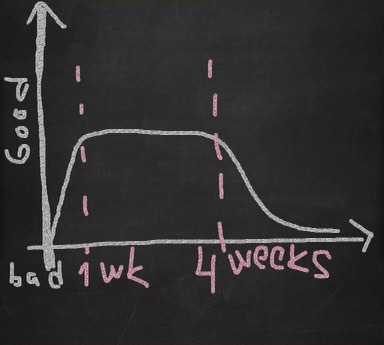
Fresh Beans Coffee is freshware. I’ll paraphrase a diagram from Tim Wendelboe’s book here:
Freshly roasted coffee beans take a couple of days to settle to their best form. After that, they remain optimal for a few weeks. After about four weeks – and sooner if they are in contact with oxygen, i.e. you opened the bag – they start going stale fairly rapidly.
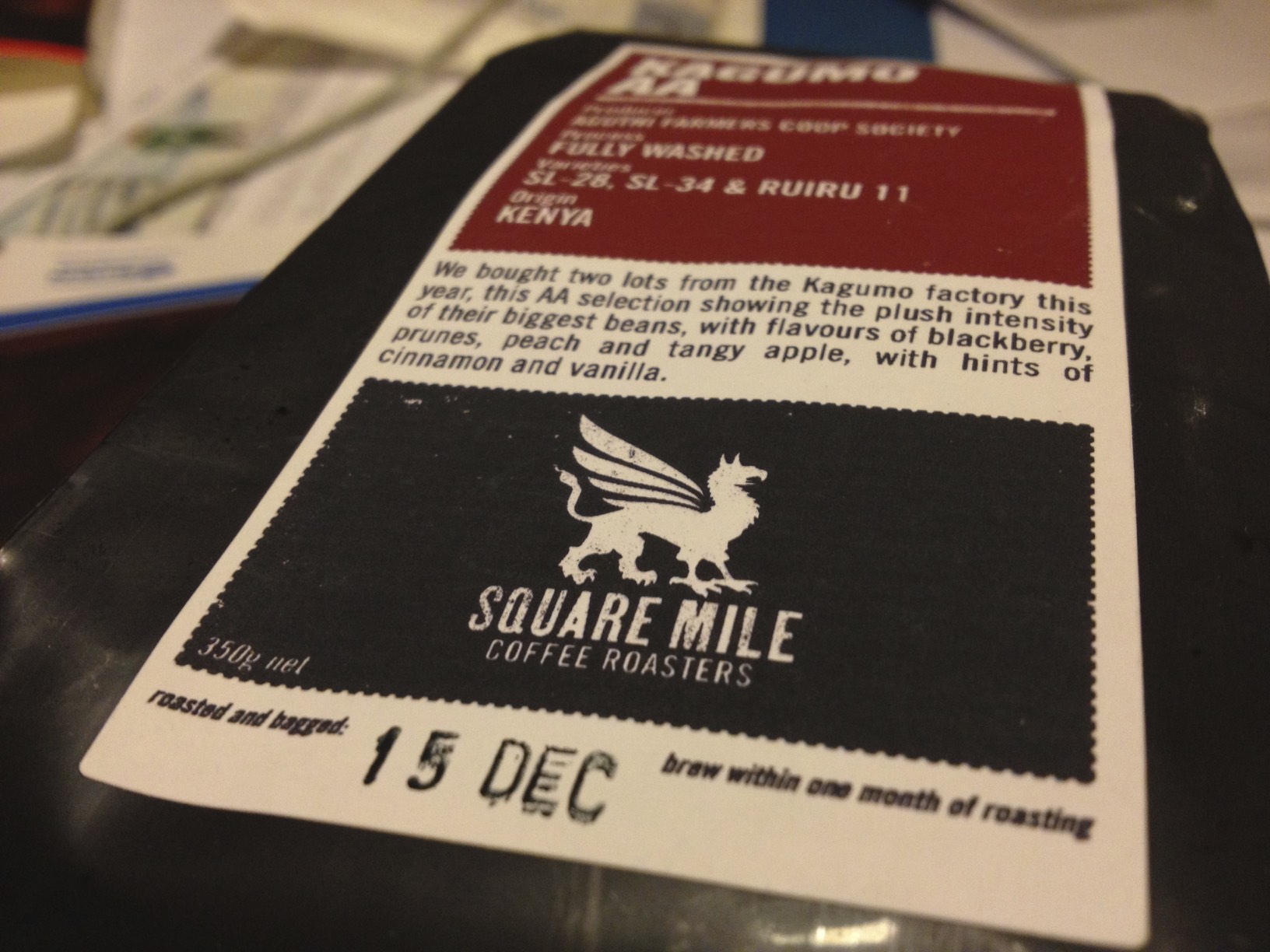
This brings us to a measurement of roaster honesty. I’ll start with the best example, Square Mile Coffee:
“Brew within one month of roasting”
As you can see, this pretty much matches with Wendelboe’s graphic.
The next level is Has Bean. They tell the coffee is best within one month, but you should definitively use it within three.
Down another notch, we have Kaffiino. They still mention the roasting date, but pretend the coffee is still good half a year after roasting. It isn’t.
On the bottom level we have most of the commodity coffees. They tend to give anything up to year before the expiry date. What’s worst, they do not tell the exact roasting date, so you’re left with guessing how much time they give their coffee to go stale and calculating from there when it was roasted. This is pure dishonesty. The roasting date is the most important thing on the label of a coffee bag. Unfortunately, even many reasonably good specialty coffee roasters (like Johan & Nyström and at least sometimes, Mokkamestarit) can be found on this pathetic level.
The lesson to learn here: buy only from roasters that can guarantee the freshness of the roast.
-
Fresh Grind
Note that in the previous point, I only talked about fresh beans. That’s because you should never buy your coffee pre-ground. For commodity coffee, it doesn’t really matter whether they give you six or twelve months before the expiry date because the grinds sold to you are already stale when they hit the selves.
The issues with pre-ground coffee are manifold. First, grinding coffee releases a large part of its aroma, which are lost forever if you don’t use the grinds immediately. Second, coffee really hates oxygen, which should be clear to you by now. When the coffee is ground, there is much more surface that’s exposed to the damned gas than with beans. Lastly, different brewing methods call for different grind levels. Good luck trying to make a good French press with coffee that’s ground to Aeropress level without drowning in sediment.
So, the lesson #2: Buy your beans whole and buy your own grinder.
-
Fresh Water
To be honest, I don’t think this is as much of an issue in Finland, where most of the tap water is pretty good. Sure, some conoisseurs want to buy bottled spring water to brew their coffee with, but I haven’t found this to make enough of a difference to justify the price, hassle and unecological choice. If you live on the west side of Tampere, you’re getting ground water from your tap anyway. I’m not, but the water is still ok.
Still, you probably don’t want to reuse water that’s been sitting in the electric kettle for two days already. But you already knew that.
-
My own addition: Fresh Brew
Probably the biggest reason people seem to think that espresso-based drink are the “good” coffee, as opposed to filter coffee, is that in most cases filter coffee has been sitting on top of a hot plate for quite some time. Espresso drinks on the other hand are basically always made to order.
Now, here’s the thing: coffee (the drink) does not stand heating. This includes everything from the hot plate of your coffeemaker to microwave oven to percolator. Quality coffee is good when hot, best when slightly less hot and still great when not that hot anymore. Actually it tastes quite awesome even when cold.
Lesson 4: Don’t let your coffee stand in the coffee maker after it’s done. If you need it to stay hot for longer, pour it into a vacuum bottle.
With these lessons under our belt, here are a couple of practical tips for your coffee pleasure.
Quality beans in Tampere
Like you learned in lessons 1 and 2 above, you’re going to buy freshly roasted, whole beans. Finding them in Tampere is kind of tricky, but not impossible.
By mail
Your best bet it pretty much always mail order. This is mostly because the best roasters only ship coffee right after roasting. This means that they settle down just the right amount during the days it takes for them to reach your mailbox and are thus ready to use.
My absolute favorite roaster is Square Mile Coffee in London. Pretty much all their coffee is direct trade. While the selection isn’t huge, you also cannot go wrong with any of their coffees. I recommend getting a subscription from them, which means at the beginning of each month they will send you a bag of coffee fitting the season. If you’re not ready for a subscription, just order a bag or two. The shipping costs are pretty much the same as with any Finnish roaster. Note that they only roast twice a week, so your order might take a couple of days to ship.
Another great British roaster is Has Bean Coffee. Their selection is vast compared to Square Mile and includes lots of different types of coffees, including organic varieties. They also offer subscriptions (both monthly and weekly) which are considerably cheaper than Square Mile’s. However, it’s worth noting that their bags (as most other roasters’) are 250 grams, as opposed to Square Mile’s 350 g.
Locally
In my opinion, currently the best coffee roasted in Finland comes from Turun Kahvipaahtimo. Unfortunately, they don’t have an online store, let alone subscriptions. Fortunately, Kahvila Valo on Puutarhakatu sells their coffee. However, they seem to sell such limited amounts of it that it’s best to find out their shipping schedule to know when to go look for new beans.
Kaffa is a fairly new entrant in the Finnish coffee scene. Operating in Rööperi in the heart of Helsinki, Kaffa’s guys seem to put a fair amount of love and effort into their offerings. They have some interesting coffees such as the Indian Monsoon Malabar, but on average they seem to me a bit more hit and miss than Turun Kahvipaahtimo. E.g. even though they say they only send freshly roasted coffee, I’ve often gotten weeks old coffee sent to me from their online store. However, Mama’s Corner sells their coffee in the market hall, and there you can be sure about the roasting date of the coffee. Unfortunately, the same disclaimer as with Valo and Turun Kahvipaahtimo applies: the coffee comes to the store every once in a while, so you can’t rely on it being totally fresh whenever you step into the shop.
The original local roastery in Tampere is called Mokkamestarit. They roast a surprisingly varied selection of coffees, including fair trade, direct trade, organic and Cup of Excellence beans. Kahvila Valo sells a (very) limited selection of Mokkamestarit’s coffee. However, for the full selection you should probably visit their roastery shop in Vermo. My issue with Mokkamestarit is that they don’t tell the exact roasting date at least with the coffees I’ve seen. Moreover, they set the expiry date to something ridiculously long like a year, so it might be difficult to make sure how fresh the coffee is. However, if you can make sure you get truly freshly roasted coffee from them, they are probably a fine option.
Just recently I learned about Fresh Coffee Roastery, which operates in Onkiniemi. Unfortunately, it seems that they neither have a shop at the roastery nor have a reseller in Tampere, so your only option is to rely on their web store. I have yet to taste their coffee, so I can’t really vouch for them.
Grinding your coffee
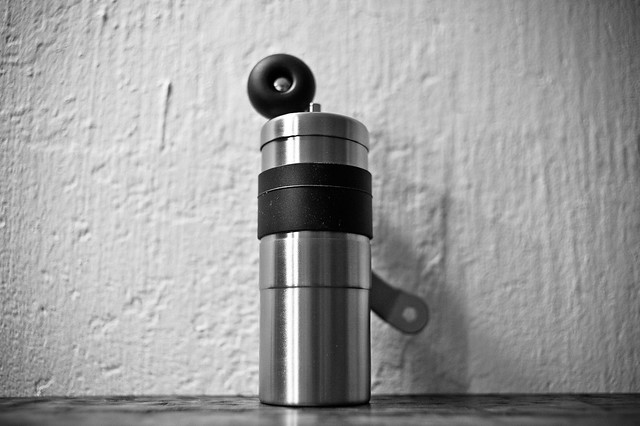
My advice is to start with a quality hand grinder, not a cheap electric blade grinder. The important bit is to get a burr grinder, not a blade grinder. I use a Porlex hand grinder, which is stainless steel throughout, with ceramic burrs. Since the hopper is not plastic, it generates very little static so it’s very easy to get the grinds out of it. Another great thing about Porlex is that it fits perfectly inside an Aeropress, so they make a great travel kit together.
Another hand grinder people seem to recommend is Hario Skerton. I have not used it myself, but you shouldn’t go astray with either of them.
The downside of a hand grinder is that grinding coffee with one is fairly slow and their capacity is limited. Every time we have visitors for coffee (not really that often) I wish I had an electric grinder. Any other time, I don’t.
Another issue with hand grinders is that it is somewhat difficult to control the grind coarseness. It happens with a screw so it’s next to impossible to “store” different settings for different brewing techniques.
The upside of a hand grinder is that it doesn’t wake up the whole house, and grinding coffee with it is a nice morning ritual. If your arms are in bad shape, it probably counts as exercise as well.
I’ve decided not to get an electric grinder before I can justify getting a really good one. At the moment that would mean Mahlkönig Vario.
Brewing the coffee
Everyone who gives a shit about coffee in Finland probably has a Moccamaster. The good news is that there’s no reason to get rid of it. However, (unless you have a model with a vacuum bottle) you should never let the brewed coffee stay on the hot plate after it’s ready. This means that if you want to serve hot coffee during a longer period, you need a good vacuum bottle.
That said, there’s something deeply gratifying in having more control over your brew. For that, there are several inexpensive options. These are what I use myself:
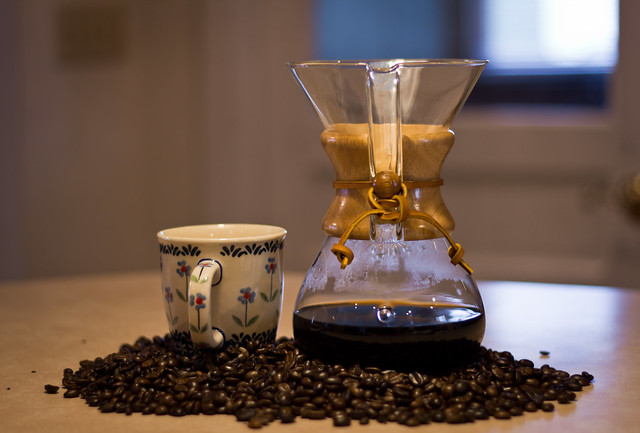
Chemex
The legendary Chemex coffeemaker was invented in 1941 by Dr. Peter Schlumbohm. He’s famously quoted saying that “With this, even a moron can make good coffee.” To add to that, Chemex is on an ongoing display in the Museum of Modern Art in New York. We have an 8-cup version of the brewer and use it pretty much every morning.
Aeropress
While it lacks the elegant looks of a Chemex, Aeropress is a truly miraculous device. This inexpensive (and somewhat cheap-looking) device can extract some of the best brews from your beans and it does it in a time that really can’t be beaten. Like said above, an Aeropress makes a great travel kit with the Porlex grinder (and some quality beans) which means you can have great coffee wherever you go. Just add water.
Moreover, Aeropress is very easy to clean up. After the brew, you just pluck the filter and grinds into a biodegradable waste container and rinse the device with hot water. This makes Aeropress also a great office coffeemaker. Using it will first get you some amused glances, and then some ridicule. And then, until you realized what happened, everyone will be using you ‘press. At least that’s what I imagine would happen. I don’t really have any officemates so I extrapolated from my wife.
I don’t have time for this, just tell me where to get great coffee in Tampere.
Kahvila Valo. They have a horrible website but are indeed a great, somewhat rustic café. Like said, they sell a decent selection of freshly roasted beans from different roasters. Most importantly, they have recently added several new brewing methods into their arsenal: Aeropress, Chemex and Abid Clever dripper. My favorite cup of coffee there is a strong smooth Kenyan made with Abid.
Unfortunately Valo only opens at 11AM, so it’s not suitable for morning coffee. On the flipside, it is more or less empty until late afternoon, so it’s a great place to hack in if you’re looking for a quiet office outside the office. They also serve light food such as lunch salads, sandwiches and soups.
Jaakko Halmetoja says nice words about Kahvila Taikapapu. I haven’t checked them out myself yet.
Where to go next?
Filter coffee is an affair that is easy to get into, but that has a pretty much limitless depth. On theoretical level, I’d recommend reading Has Bean’s Coffee 101 and Mathias Meyer’s Beginner’s Shopping Guide to Filter Coffee Gear. But most importantly, just get the bare minimum of needed equipment – e.g. an Aeropress with a Porlex grinder –, some quality beans and start experimenting.
And enjoy.